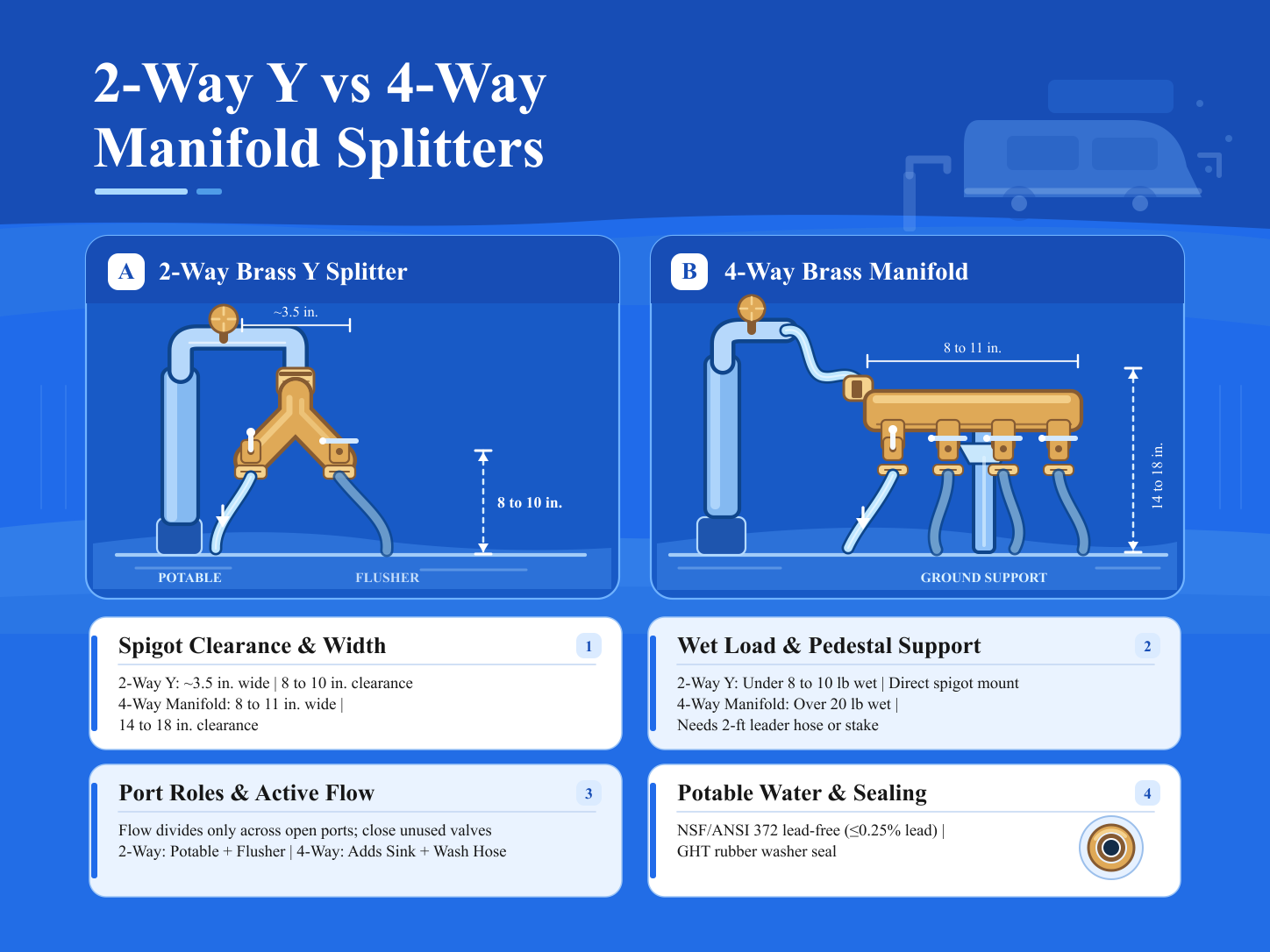

A 2-way Y splitter fits low campsite spigots and standard two-line hookups, while a 4-way manifold suits four dedicated water lines only when the pedestal has enough vertical clearance and physical support. Choosing between the two starts with measuring the spigot’s height above the ground and counting how many hoses need to stay connected at the same time.
For RV owners comparing multi-line RV hose splitters, the practical difference goes beyond port count. A compact 2-way Y valve works well on low pedestals for a primary drinking water hose and a black tank flusher. A wider 4-way manifold suits extended stays where a drinking line, black tank flusher, outdoor kitchen sink, and utility washdown hose remain hooked up simultaneously.
Key Takeaways
- Spigot clearance: A typical 2-way brass Y splitter fits low spigots with as little as 8 to 10 inches of ground clearance, whereas a 4-way brass manifold with four attached hoses generally requires 14 to 18 inches of vertical space to prevent hose kinking.
- Pedestal load and support: Four water-filled hoses hanging from an 8- to 11-inch manifold can exceed 20 pounds of coupled weight, requiring a 2-foot flexible leader hose or a mounting stake so the load rests on the ground rather than the campground pipe.
- Flow management: Water volume divides only across ports that are open at the same time; keeping secondary shutoff valves closed preserves full available flow to the main RV freshwater line.
- Port allocation: A 2-way Y covers the two core campsite lines (potable water and sewer flusher), while a 4-way manifold adds permanent connections for an outdoor kitchen and a utility wash hose.
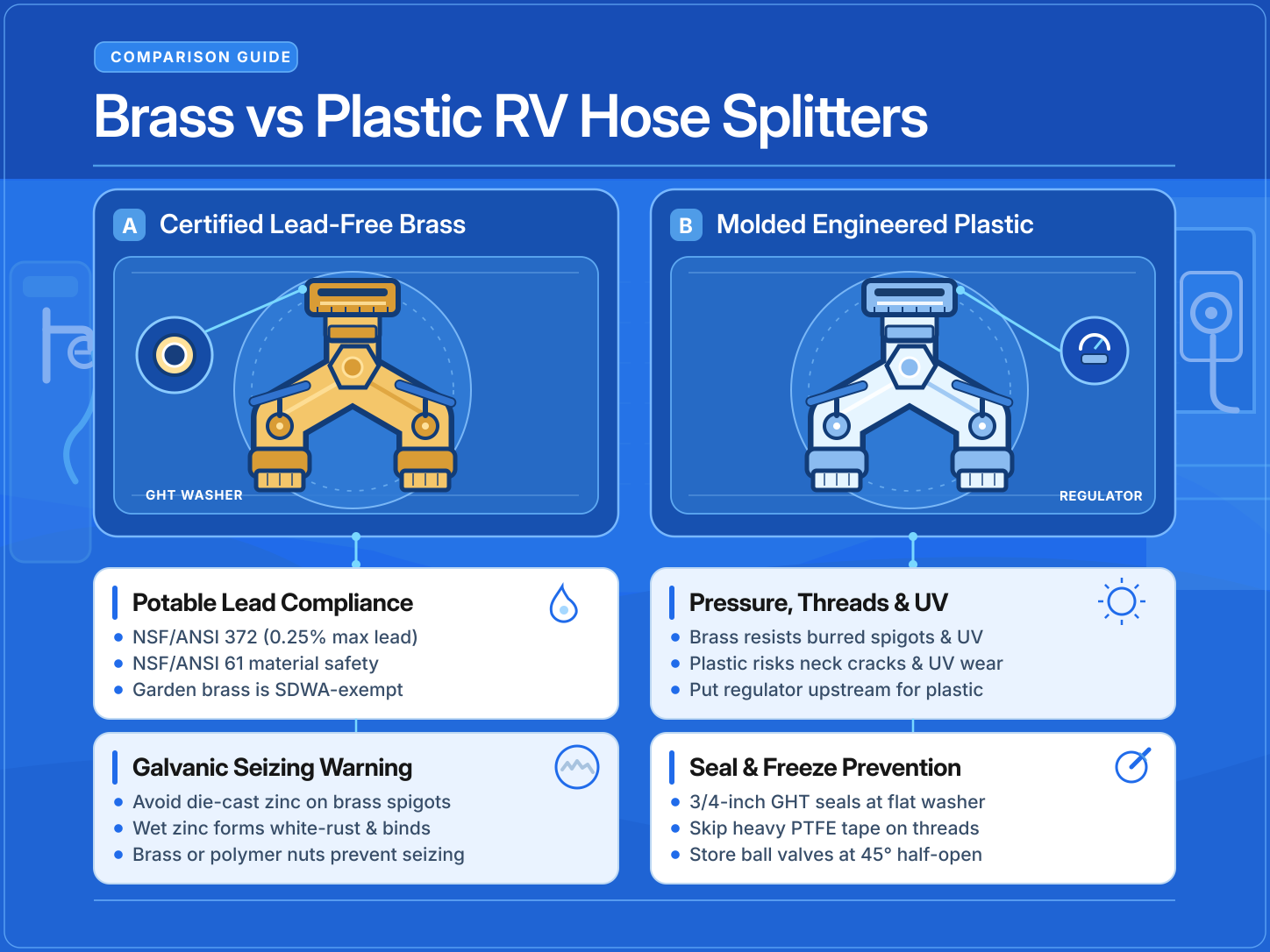
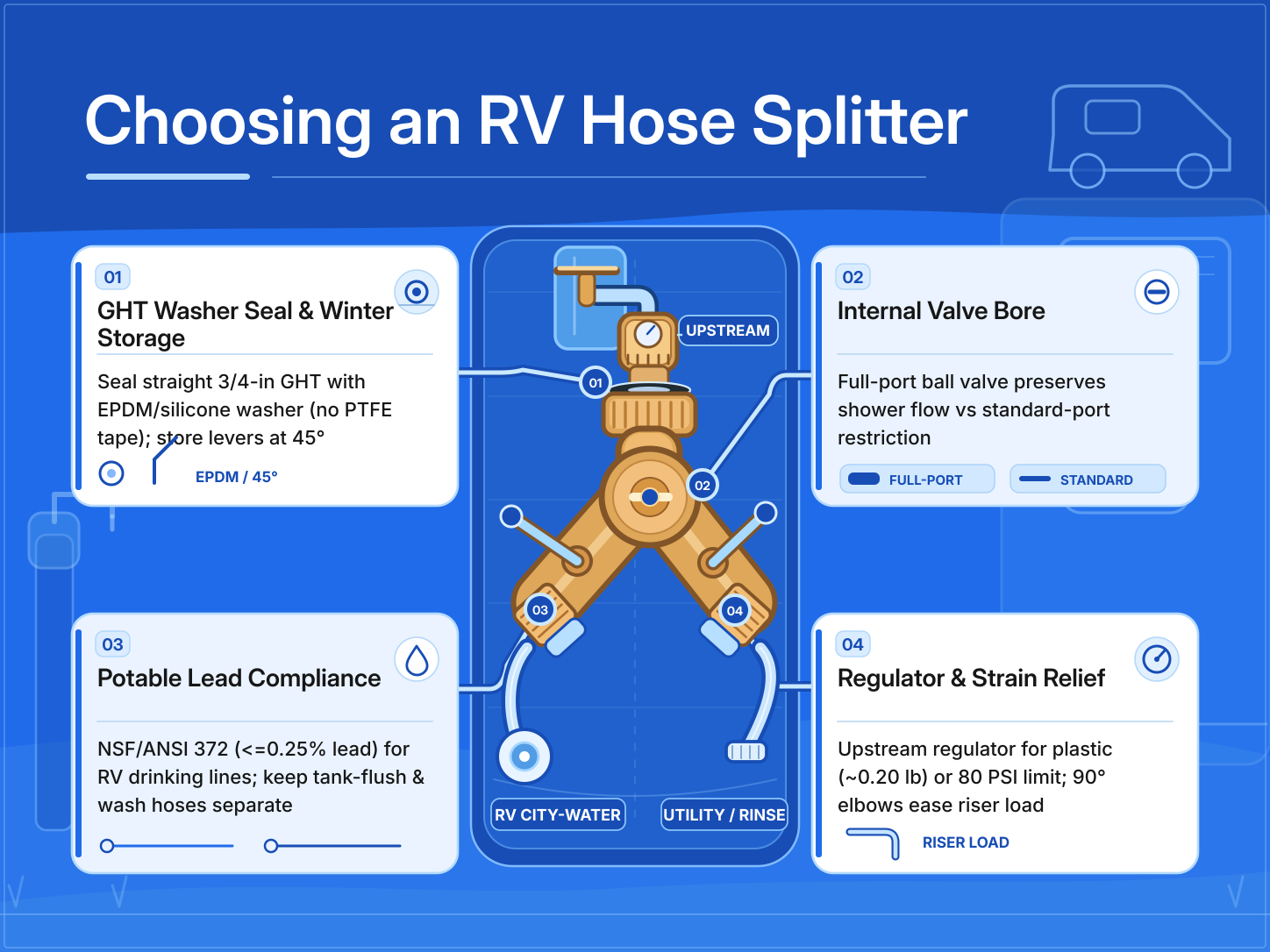
- Potable water safety: Any splitter supplying RV drinking water should carry NSF/ANSI 372 lead-free certification (0.25% maximum weighted average lead content across wetted surfaces).
Comparison at a Glance: 2-Way Brass Y vs 4-Way Brass Manifold
A 2-way Y splitter is a compact dual-port valve with angled outlets that direct hoses outward, while a 4-way manifold is a wide horizontal distribution block with four downward-facing or slightly angled outlets. Both architectures use standard garden hose thread (GHT) connections and individual shutoff levers, but their footprint and loaded weight create very different demands at the campsite pedestal.
The table below compares typical specifications and operating characteristics for generic brass 2-way Y splitters and 4-way manifolds.
| Attribute | 2-Way Brass Y Splitter (Typical) | 4-Way Brass Manifold (Typical) |
|---|---|---|
| Body width | Roughly 3.5 in. | 8 to 11 in. |
| Uncoupled dry weight | Under 1.0 lb | 1.8 to 3.0 lb |
| Coupled wet load at spigot | Typically under 8 to 10 lb | Can exceed 20 lb with four filled hoses |
| Required vertical clearance | 8 to 10 in. above the ground | 14 to 18 in. with four hoses attached |
| Strain on spigot stem | Low when hung directly on the faucet | High rotational strain unless supported |
| Flow behavior | Full single-line flow when full-bore and second port is closed | Volume drops noticeably when three or four ports run at once |
| Typical port roles | Potable drinking hose and black tank flusher | Potable water, flusher, outdoor sink, and washdown hose |
| Relative cost and storage | Often costs roughly half as much; fits small storage bins | Higher cost; bulkier to pack and store |
Because a 2-way brass Y splitter typically measures around 3.5 inches wide, it fits inside recessed utility boxes and shallow pedestal enclosures. An 8- to 11-inch 4-way manifold cannot thread onto a spigot inside a narrow enclosure without a flexible extension hose to bring the manifold outside the box.
How Do Spigot Clearance and Hose Weight Affect the Pedestal?
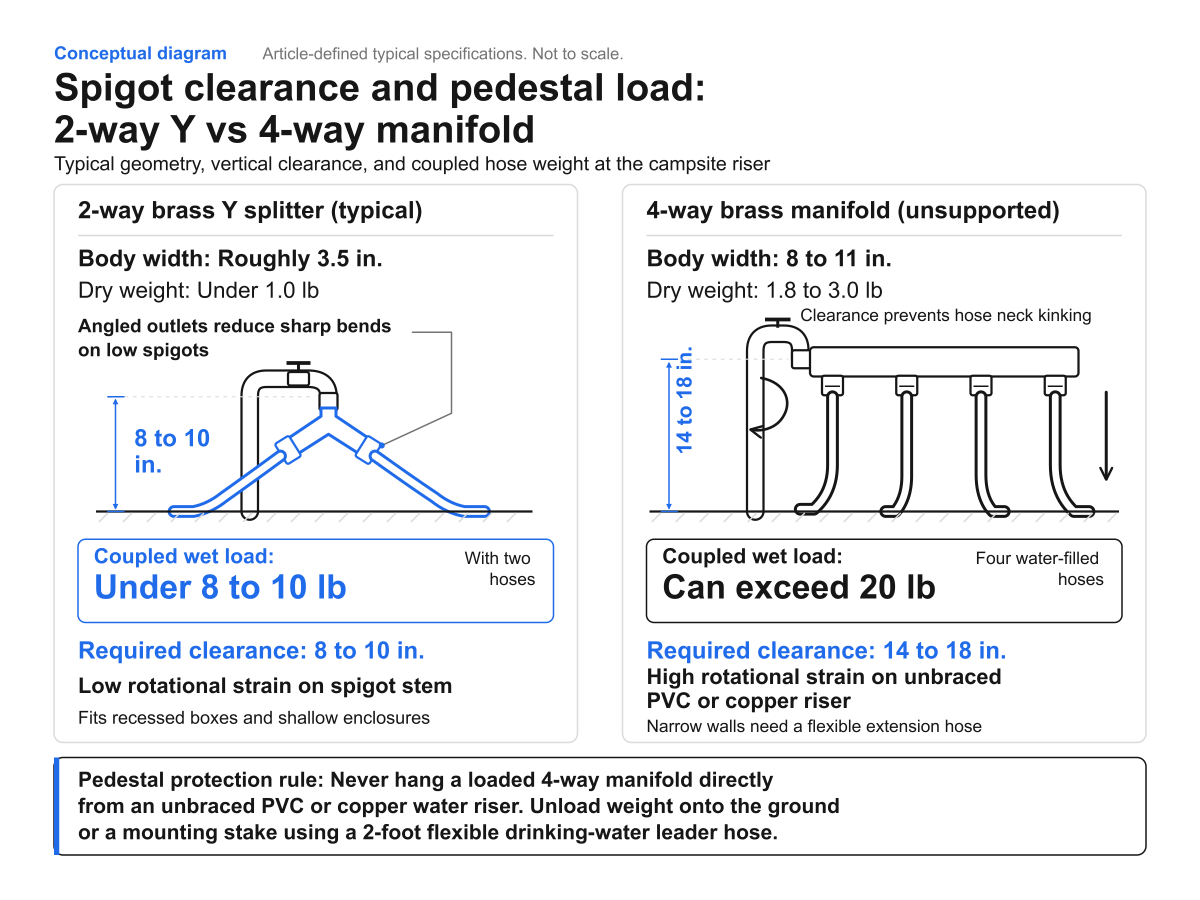
A 2-way Y splitter fits low spigots and places minimal rotational strain on the pipe, while an unsupported 4-way manifold requires 14 to 18 inches of vertical clearance and can overload weak utility risers.
On a 2-way Y splitter, the angled outlets direct attached hoses outward at an angle rather than straight toward the dirt. This geometry reduces sharp bends at the hose collar on spigots set 8 to 10 inches above the ground. Because the compact brass body hangs close to the faucet stem and carries only two hoses (typically under 8 to 10 pounds of coupled wet weight near the connection), it generates minimal cantilever torque on the threaded spigot.
On a 4-way brass manifold, four hoses hanging side by side require 14 to 18 inches of vertical clearance so the hose necks do not kink against the ground, especially when inline accessories are attached below the outlets. When all four hoses fill with water, the combined load hanging from the wide manifold body can exceed 20 pounds. Hanging that weight directly from an unbraced PVC or copper campground riser creates enough leverage to bend or crack the standpipe.
How Should You Support a Heavy 4-Way Manifold?
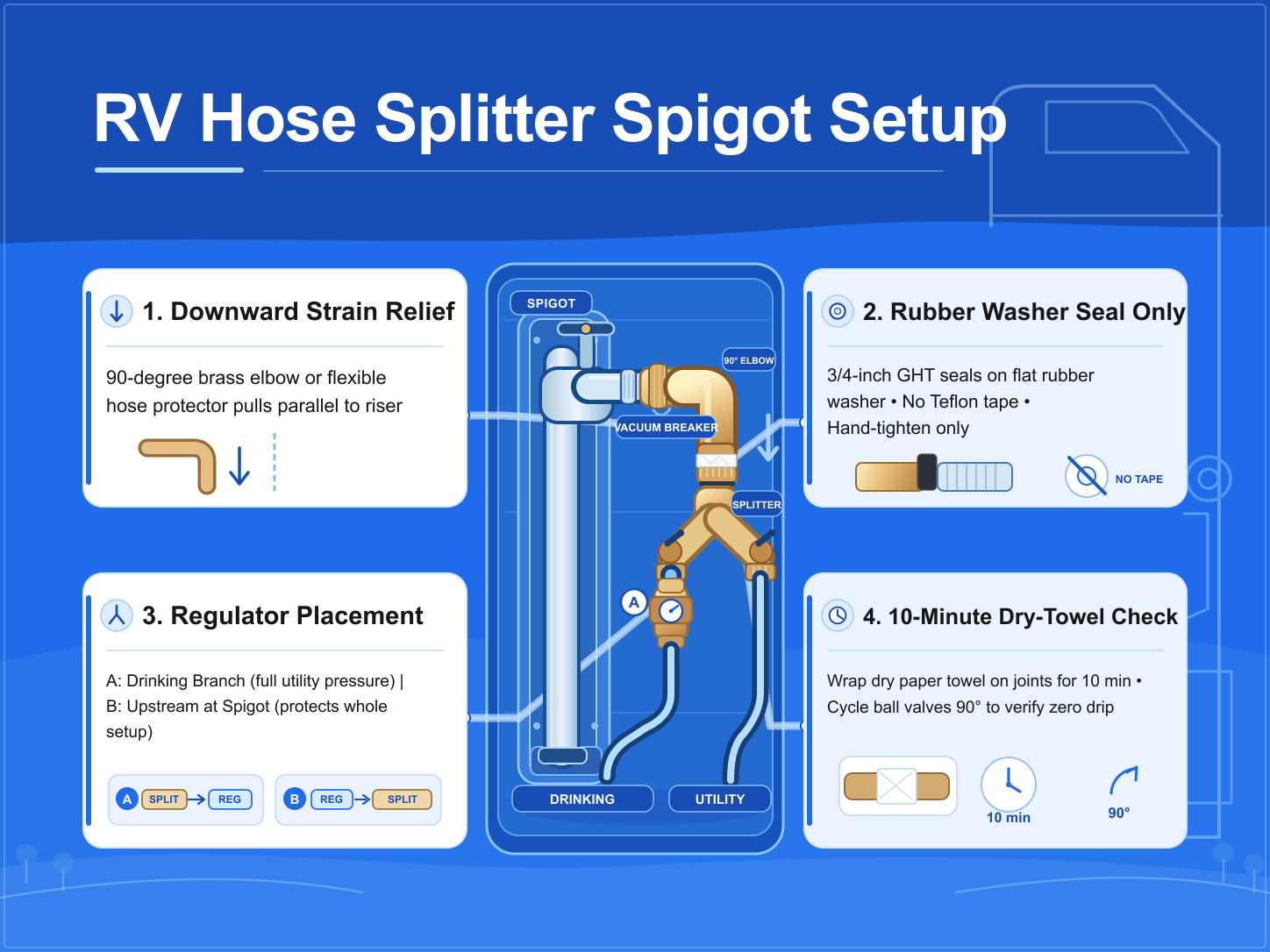
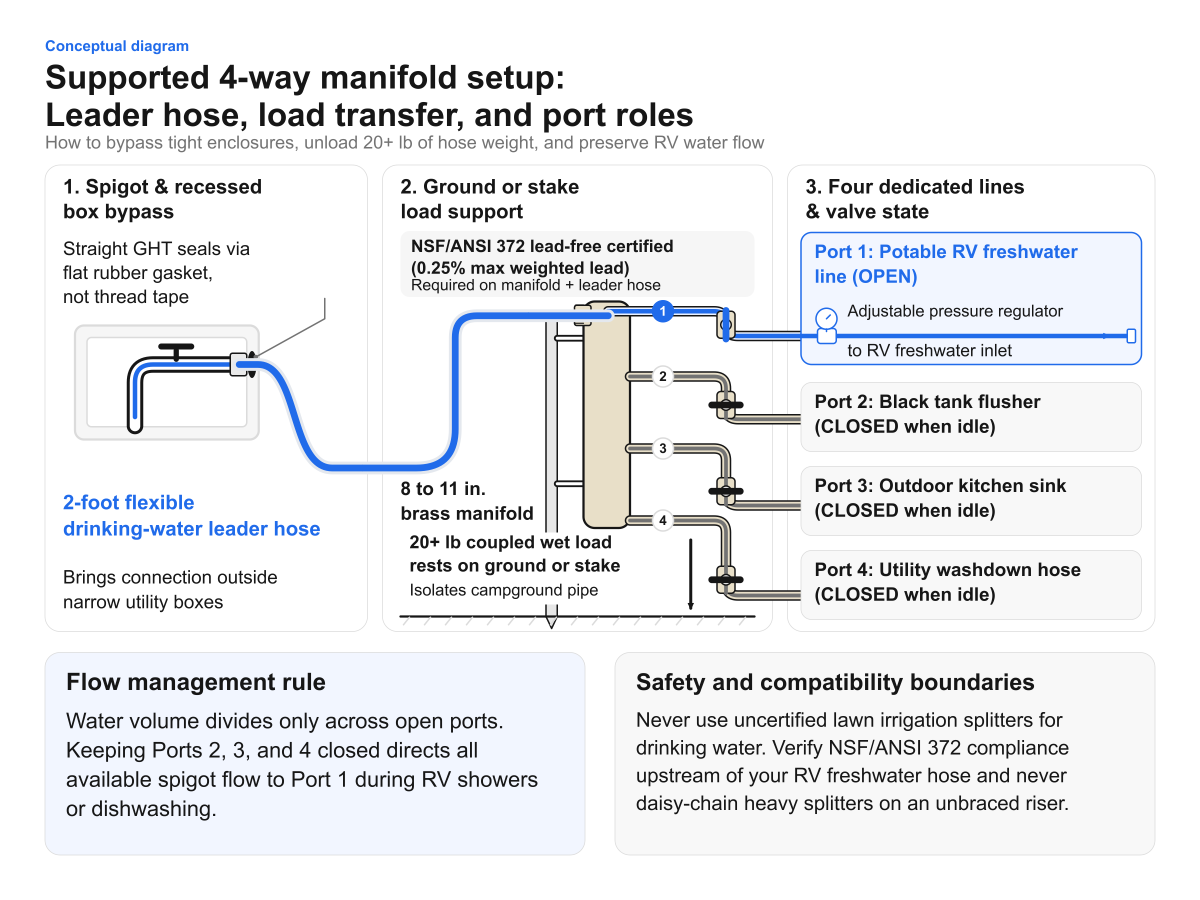
Connecting a 2-foot flexible drinking-water leader hose between the campground spigot and the 4-way manifold removes cantilever weight from the pedestal by letting the manifold rest on the ground or a mounting stake.
Instead of threading the wide brass block directly onto the rigid campsite faucet, attach one end of a short, potable-water-safe leader hose to the spigot and the other end to the manifold’s inlet. You can then lay the 4-way manifold flat on the ground or secure it to a dedicated support stake driven beside the pedestal.
Using a flexible leader hose solves two problems at once:
- It isolates the campground plumbing from the weight and tug of four water-filled hoses.
- It bypasses tight pedestal enclosures and low spigots where an 8- to 11-inch manifold body would otherwise hit the housing or the ground.
How Does Water Flow Divide Across Open Ports?
Water flow divides only when multiple ports run at the same time, not merely because extra ports are attached to the spigot.
When a 2-way brass Y splitter is built with full-port (large-bore) internal ball valves, keeping the secondary flusher port closed allows the primary freshwater hose to receive unrestricted flow from the campground supply. Opening the second port while someone is showering inside the RV splits the incoming water volume between both lines and reduces interior fixture pressure.
A 4-way manifold behaves the same way when three ports remain closed, provided its internal valve passages are not overly restrictive. However, when three or four ports run simultaneously, such as running an outdoor sink and a washdown hose while RV faucets are open, the single spigot supply divides across all open lines and causes a sharp drop in flow and pressure.
To keep RV shower and faucet flow steady on either splitter:
- Keep auxiliary valves (black tank flusher, wash hose, outdoor kitchen) closed whenever they are not actively in use.
- Pair the setup with an adjustable water pressure regulator to protect RV plumbing from high campground pressure while maintaining steady working pressure during normal demand.
Which Splitter Fits Your Camping Scenario?
A 2-way Y splitter fits overnight and weekend trips that require only a drinking water line and a tank flusher, while a 4-way manifold fits seasonal or full-time stays with multiple auxiliary water accessories.
| Camping Scenario | 2-Way Brass Y Splitter | 4-Way Brass Manifold |
|---|---|---|
| Weekend trip with freshwater hose and tank flusher | Fit: Covers both essential lines without extra bulk | Skip: Unused ports add weight, width, and setup complexity |
| Low spigot (8 to 10 in. off the ground) or recessed box | Fit: Compact body and angled ports clear tight spaces | Skip (unless using a leader hose): Needs 14 to 18 in. of vertical clearance |
| Seasonal or full-time site with outdoor kitchen and wash hose | Skip: Requires uncoupling hoses to switch accessories | Fit: Keeps all four lines permanently connected with individual shutoffs |
| High-demand interior water use (showering or washing dishes) | Fit: Close the second valve to send full supply to the RV | Fit with management: Close auxiliary ports so three or four lines do not run at once |
For most traveling RV owners, a 2-way Y splitter handles the standard campsite routine without requiring a support stake or leader hose. If you only use a utility wash hose occasionally, swapping it onto the secondary flusher port takes less effort than supporting a 4-way manifold at every stop. Conversely, if you stay parked for weeks and regularly use an outdoor sink, dog wash, or rinse hose, a supported 4-way manifold eliminates repeated hose changes.
What Safety and Compatibility Limits Apply Before You Buy?
Before purchasing either splitter architecture, verify potable-water lead certification, riser support requirements, and garden hose thread sealing rules:
- NSF/ANSI 372 lead-free certification: Any splitter supplying potable water to your RV must be certified to NSF/ANSI 372, which limits weighted average lead content across wetted surfaces to 0.25% or less. Standard brass hardware sold for residential lawn irrigation is not required to meet potable drinking-water standards and should never feed an RV freshwater line.
- Unbraced riser protection: Never hang a loaded 4-way manifold directly from an unbraced PVC or copper water riser. Always unload the weight onto the ground or a stake using a flexible leader hose.
- Gasket compression sealing: Both 2-way and 4-way splitters use straight garden hose threads (GHT). Straight GHT fittings seal by compressing a rubber washer against the mating face of the spigot, not through thread interference. If a connection drips at the collar, inspect or replace the rubber hose gasket rather than wrapping plumbing tape around the threads, which can prevent the collar from seating against the washer.
Next Steps Before Your Next Hookup
- Check typical pedestal clearance: If you camp at state parks or older campgrounds with low spigots (under 12 inches high) or recessed utility boxes, carry a compact 2-way brass Y splitter or a flexible leader hose.
- Count your permanent water lines: Choose a 2-way Y for a dedicated drinking hose plus a black tank flusher. Step up to a 4-way manifold only if you consistently keep three or four lines connected at the same campsite.
- Pack the right support hardware: If you choose a 4-way manifold, pair it with a 2-foot NSF/ANSI 372 drinking-water leader hose so the manifold can rest safely on the ground.
Frequently Asked Questions
Does a 4-way manifold reduce water pressure when only one hose is open?
A 4-way manifold divides water volume only across ports that are open at the same time. When the three secondary valves are shut off, all available flow from the spigot goes to the single open port, subject only to the internal diameter of that valve’s passage.
Why can’t I use a standard hardware-store garden splitter for RV drinking water?
Standard lawn and irrigation brass splitters are not required to meet federal potable-water lead limits. Before the 2014 Safe Drinking Water Act update took effect, plumbing brass could contain up to 8% lead, and uncertified irrigation fittings may still leach lead into drinking water. Always verify NSF/ANSI 372 lead-free compliance (0.25% or less weighted average lead content) for any fitting connected upstream of your RV freshwater hose.
Can I combine a 2-way splitter and a 4-way manifold on the same spigot?
Stacking multiple heavy brass splitters directly on a campsite faucet increases cantilever length and mechanical strain on the spigot stem. If four ports are enough, use a single 4-way manifold isolated with a flexible leader hose rather than Daisy-chaining splitters on the riser.
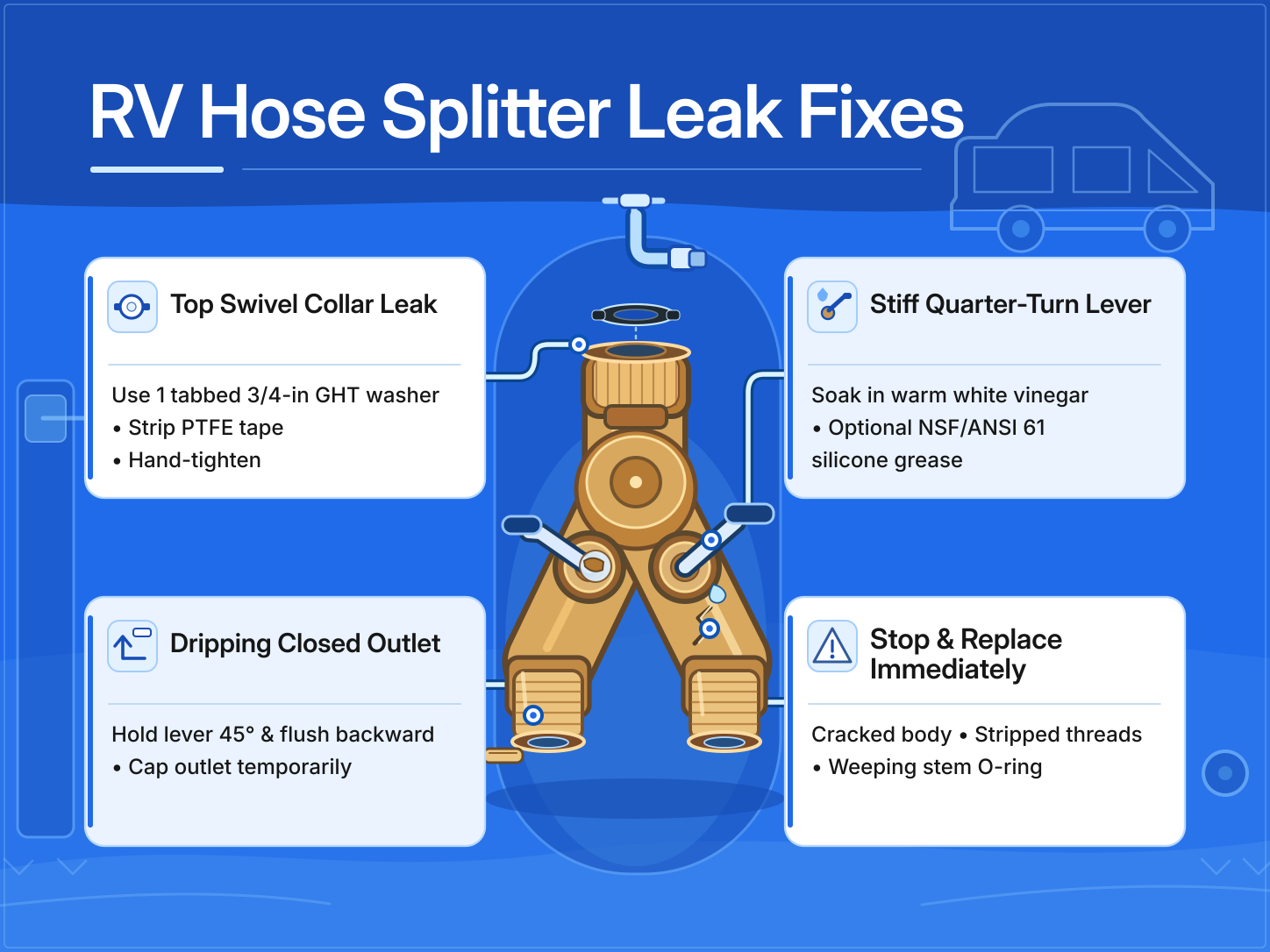
Why is my brass hose splitter leaking at the spigot threads?
Garden hose threads are straight threads that rely on a flat rubber hose washer to create a watertight seal. Thread sealant tape will not fix a missing, flattened, or cracked washer and can keep the swivel nut from tightening fully against the gasket. Replace the rubber washer inside the female swivel collar to stop the leak.
Is a 2-way brass Y splitter cheaper than a 4-way brass manifold?
A 2-way brass Y splitter often costs roughly half as much as a comparable lead-free 4-way brass manifold, takes up less space in an RV utility bin, and does not require a separate leader hose or support stake on standard pedestals.
Sources:
- Use of Lead Free Pipes, Fittings, Fixtures, Solder, and Flux for Drinking Water – U.S. Environmental Protection Agency, Safe Drinking Water Act Lead-Free Rule and 0.25% weighted average lead statutory requirement.
- How to Identify Lead Free Certified Drinking Water Products – U.S. Environmental Protection Agency Office of Ground Water and Drinking Water, PDF guidance on third-party certification marks, NSF/ANSI 372 testing, and plumbing product labeling.
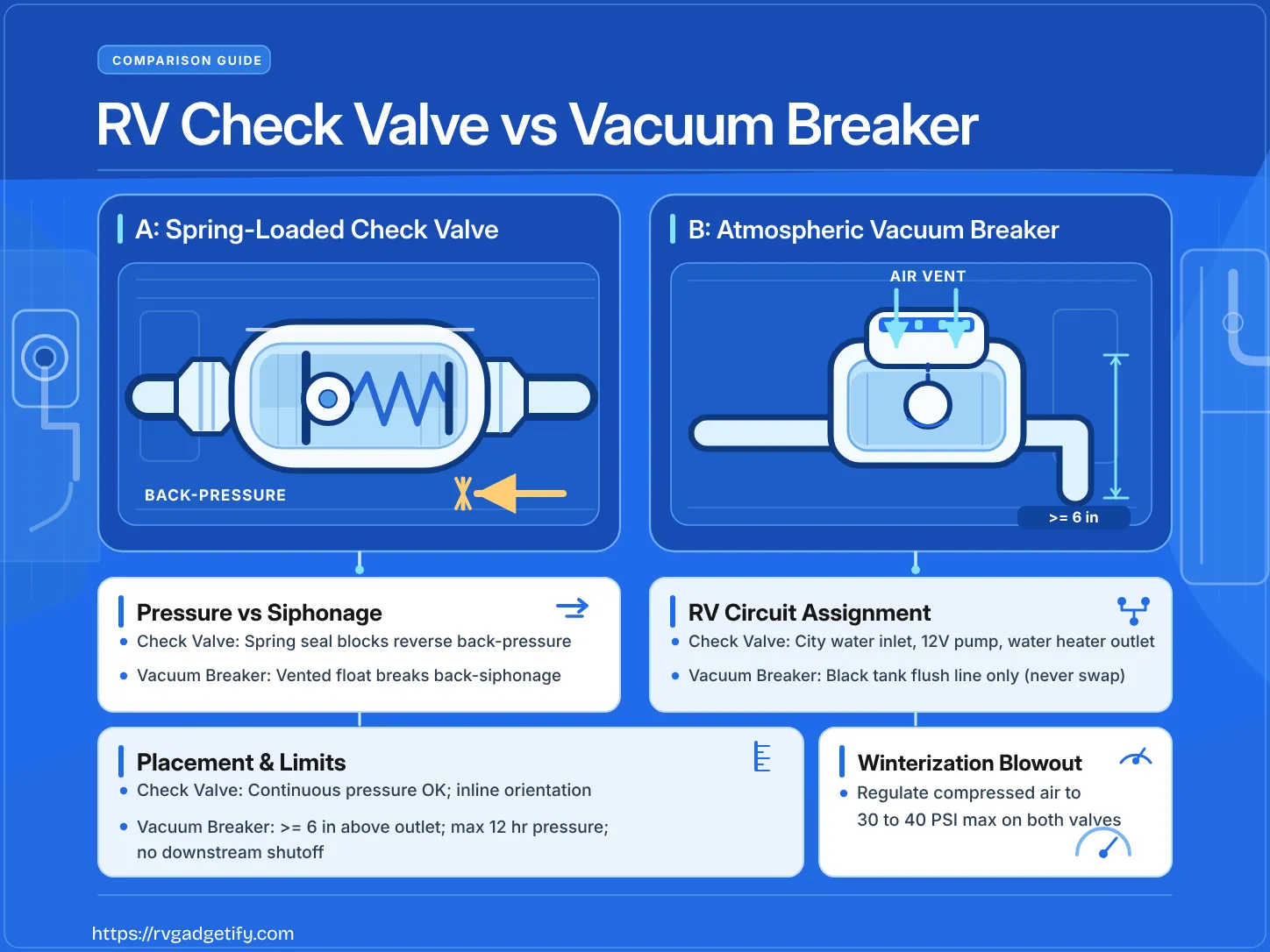
- ASSE International Plumbing Product Standards – ASSE International, performance requirements and test methods for ASSE 1011 hose connection vacuum breakers and backflow protection.
- Home Water Systems: Backflow Prevention Devices – Colorado State University Extension, technical guidance on cross-connection control, hose-end vacuum breakers, and plumbing backflow protection.